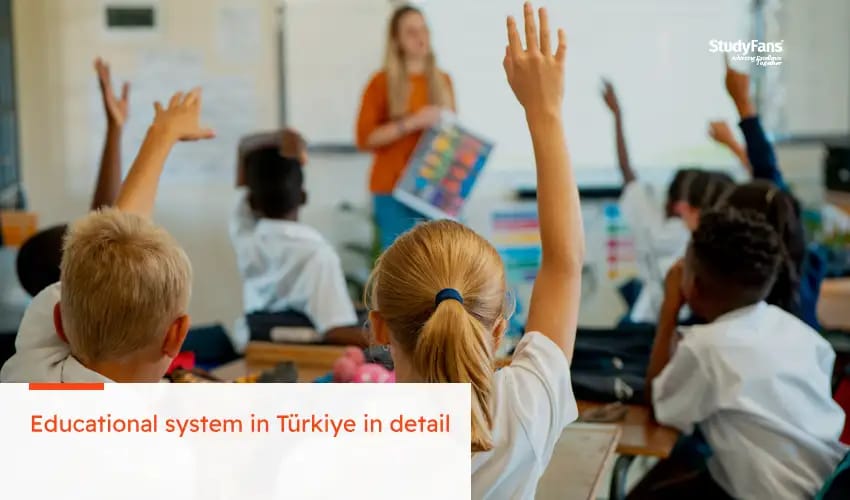

The educational system in Türkiye is well-structured and designed to meet international standards while supporting both academic and personal growth. Covering all levels from preschool to higher education, it provides students with strong learning opportunities and equal access to quality education. Understanding how this system works — from primary school through the university structure — is an essential foundation before you study in Turkiye, with both local and international students benefiting from a system that continues to evolve and improve.
Overview of Education in Türkiye
Turkey boasts a comprehensive and advanced educational system designed to meet the diverse needs of society and develop students’ skills across all levels. This system is organized according to international standards and covers all educational stages, from primary education to higher education. The government provides free and compulsory education up to the end of secondary school, ensuring equal opportunities for all children, while ongoing reform programs aim to improve the quality of education through curriculum enhancement and teacher training.
The Turkish education system includes a large number of public and private schools, in addition to numerous educational institutions subject to the laws of the Ministry of National Education. There are also private schools that adopt the open education system, as well as international public and private universities.
In recent years, demand for Arabic schools has increased due to the influx of many Arab families to Turkey, seeking to educate their children in an environment that combines Arab and Islamic culture with European advancements in various fields. It's worth noting that education in Turkey is open to Arab students, whether in Turkish schools or universities, strengthening its position as a distinguished educational destination for international students.
Why study in Türkiye?
The educational system in Türkiye attracts students from all over the world across different educational levels, thanks to its advanced and comprehensive learning environment. Türkiye not only provides high-quality education but also offers a rich cultural and social experience, blending Arab and Islamic traditions with European advancement. Here are the key advantages of education in Türkiye:
Diverse Educational Institutions:
Türkiye has a wide network of educational institutions, including 56,200 public schools and 14,179 private schools, along with schools following the open education system, providing students with a broad range of options to meet their diverse educational needs.
Increasing Number of Arabic Schools:
In response to the growing demand from Arab families, the number of Arabic schools has risen in recent years, combining Arab and Islamic culture with European educational advancement, making it easier for Arab students to integrate.
Free and Accessible Education:
Türkiye offers free educational opportunities to Arab and international students, both in schools and universities, ensuring equal access to quality education.
High-Quality Education:
Türkiye provides high-quality education that qualifies students for internationally recognized degrees, enhancing their academic and professional prospects.
Variety of Academic Programs:
Turkish universities offer a wide range of programs across various fields to meet students’ diverse interests and needs.
Cultural and Social Activities:
Educational institutions emphasize extracurricular activities, helping students develop personal and social skills and fostering teamwork.
Ease of Learning Turkish:
The Turkish language is relatively easy for international students to learn, facilitating their integration into both the educational system and society.
Student Facilities:
The Turkish government provides various support measures, such as transportation discounts and lower living costs compared to many European countries.
Opportunities for International Experience:
The Erasmus+ exchange program allows students enrolled in Turkish universities, including international students, to study for a semester or a full academic year at partner universities in Europe, opening doors to unique academic and life experiences.
Choosing Türkiye as a study destination goes beyond earning a degree, it is an investment in a complete life experience that combines quality education, personal growth, and international opportunities.
Levels of the educational system in Türkiye
Regarding basic education, since 2012, compulsory education in Turkey lasts 12 years, divided into three main stages: primary education, middle education, and secondary education. This reflects the comprehensive development of the educational system in Türkiye, ensuring a solid educational foundation for all students in the country.
In 1981, under the new Higher Education Law, Turkey’s higher education system underwent a comprehensive restructuring, becoming fully centralized with all higher education institutions placed under the supervision of the Council of Higher Education. Following these reforms, all institutions were designed as universities, expanding higher education nationwide. University admissions also became centralized, with a centralized university entrance exam system implemented to standardize admission criteria. Notably, the first non-profit foundation university began offering programs to students in 1986.
1- Early Childhood Education:
This stage is designed for children aged 3 to 5, before entering compulsory primary education. It is an optional program that emphasizes early cognitive, social, and emotional development, preparing children for a smooth transition into formal schooling.
2- Primary Education in Türkiye:
Primary education is compulsory for all children and begins at age six, lasting eight years in total, divided into two cycles:
First Cycle (Grades 1–4, ages 6–10): Students focus on the basics, reading, writing, mathematics, science, social studies, and arts, while developing social skills, cognitive abilities, and critical thinking. English language instruction begins in the second grade. Additional support programs are available for students who need extra help.
Second Cycle (Grades 5–8, ages 10–14): Students continue their academic development and are introduced to information about secondary education options, including general, vocational, and technical high schools.
Schools are primarily overseen by the General Directorate of Basic Education, whereas religious and specialized institutions (music, sports, and vocational schools) fall under their respective supervisory bodies. The learning environment promotes active student-teacher interaction and includes sports, cultural, and artistic activities to ensure well-rounded development. Enrollment for international students is managed through the local education directorates.
3- Secondary Education in Türkiye:
Secondary education is compulsory for all citizens and typically serves students aged 14 to 17, covering grades 9 through 12. This stage includes general high schools, vocational schools, and technical institutions, all offering four-year programs. Education in public secondary schools is free of charge. The curriculum is designed to prepare students for higher education or direct entry into the workforce, providing both academic and practical skills according to the chosen track.
At the end, students take the National University Entrance Exam (YKS) to determine their university placement.
4- Higher Education in Türkiye:
After completing secondary education, students can pursue higher education, which follows the Bologna Process framework and consists of three cycles:
Associate (vocational) degrees,
Bachelor’s degrees.
Postgraduate studies including master’s and doctoral programs.
Higher Education System in Türkiye
Higher education in Türkiye attracts a growing number of international students due to its strong curricula, advanced research, student-focused policies, and lower tuition costs compared to Europe. The country has around 138 public and 65 private universities, all governed by the Council of Higher Education (CoHE).
Types of Higher Education Institutions and Academic Units in Türkiye
Türkiye’s higher education system offers a diverse range of institutions designed to meet academic, research, and professional training needs:
Faculty: A primary academic unit focused on higher education, research, and scholarly publication. Faculties consist of multiple departments and programs, and students earn a bachelor’s degree after completing a program of at least four years.
Graduate School: An advanced academic institution dedicated to postgraduate education and research. Graduate schools award master’s degrees (MA/MS) and doctoral degrees (PhD).
Four-Year Schools: Higher education institutions that provide specialized professional education in specific fields, typically spanning eight semesters.
Music Conservatories: Institutions that train students in music and performing arts. Programs generally last eight semesters and emphasize both practical performance and theoretical studies.
Post-Secondary Vocational Schools: These schools aim to develop professional skills in targeted industries and provide practical, career-oriented training. Programs typically last four semesters.
Research and Application Centers: Academic units dedicated to applied research and practical studies across various fields. These centers also provide preparatory and supportive programs to enhance students’ professional competencies within higher education institutions.
This structure ensures that Türkiye offers comprehensive educational pathways, from professional diplomas and vocational training to advanced research degrees, reflecting the country’s commitment to quality and diverse higher education opportunities.
Higher Education Degrees in Türkiye
Post-Secondary Diploma in Turkey
Post-secondary diploma programs offer a practical pathway for students seeking vocational education within two years, with some programs including an additional preparatory year. These programs are provided by vocational and technical institutes and cover diverse fields such as engineering, technology, healthcare, administration, languages, and design.
The curriculum typically spans four semesters and may include practical training to prepare students for the job market.
Graduates of vocational high schools can often enroll in certain programs without an entrance exam, making these diplomas a fast and effective route to obtaining a recognized qualification.
Bachelor’s Educational (Systemecesi)
The bachelor’s degree in Turkey follows secondary education and the YKS exam. Most programs last four years and award 240 ECTS credits, while dentistry, veterinary, and pharmacy programs take five years, and medicine extends to six years. These specialized programs are considered equivalent to a master’s degree due to their duration and level of specialization. Students study in faculties comprising various departments and earn their degree upon completing the program.
Master’s Degree (Yüksek Lisans Derecesi)
The master’s program in Turkey typically lasts two years and leads to either a Master of Arts (MA) or Master of Science (MSc) degree. The program is offered in two formats: with a thesis and without a thesis.
Thesis-based Master’s: Usually spans two years, includes coursework worth at least 120 ECTS credits, followed by the preparation and submission of a thesis.
Non-thesis Master’s: Typically completed within one to one and a half years, requires at least 90 ECTS credits of graduate-level coursework, along with a final semester project.
Doctoral Degree (Doktora Derecesi)
The doctoral degree represents the highest level of academic achievement in Turkey, designed for master’s graduates aiming to contribute original research in their field. The program typically lasts 3 to 5 years and focuses on developing students’ research, analytical, and innovative skills. It includes advanced coursework worth 180–240 ECTS credits, a comprehensive qualifying exam, and the submission of a dissertation proposal, followed by the development and oral defense of an original dissertation before a specialized evaluation committee. Many top universities also offer English-language options, facilitating international students’ pursuit of advanced academic research.
Associate Degree
An associate degree is awarded after completing a two-year specialized program at universities or higher vocational schools. Many programs offer practical internships to equip students with hands-on experience, and some disciplines are also available via distance learning, making it a career-focused and flexible educational path.
Blue Diploma Certificate
The Turkish higher education system offers a valuable advantage for graduates: the Blue Diploma Certificate, issued automatically and free of charge alongside the university degree. This certificate is not a degree itself but an official document detailing the student’s qualifications, field of study, and education level according to European Union standards.
It facilitates degree recognition, applications for postgraduate studies, and international job opportunities, especially in EU countries. The Blue Diploma provides graduates with greater access to higher education worldwide and enhances their chances of securing competitive careers in Europe.
Medical Specialization Programs:
These programs are equivalent to a doctoral degree and are offered in medical schools, university hospitals, and research and training centers. Medical graduates undergo competitive entrance exams in various medical fields, and candidates are required to submit a thesis and defend it before a specialized committee.
Proficiency Programs in the Arts:
This postgraduate program lasts at least six semesters in the visual and performing arts and is equivalent to a doctoral degree. The program requires students to present an original artistic work or a distinguished creative performance in music and performing arts, which is evaluated by a specialized academic committee.
Open Education System in Türkiye
The open education system in Turkey offers students a flexible opportunity to pursue their studies remotely, without daily attendance or a fixed university schedule. This system is ideal for those who cannot attend campus regularly or wish to work alongside their studies.
Students access course materials online via computers or the internet, and lessons can also be viewed through TV channels or university mobile apps. The system is highly flexible, allowing students to watch lessons anytime and as many times as needed, learning at their own pace.
Official exam centers are available in all Turkish provinces, affiliated with universities offering open education, such as Anadolu University, Istanbul University, and Atatürk University, ensuring students are assessed according to high academic standards.
Enrollment Methods for Open Education in Turkey
Turkish universities that offer open education, such as Anadolu, Istanbul, and Atatürk, provide two enrollment options:
Direct admission through the regular selection process: Students apply via the university’s YÖS exam or based on their high school diploma, which determines acceptance into the desired program.
Enrollment for students transferring from another university: This option allows students who are already enrolled in a Turkish university to transfer directly to the open education program in their chosen field without applying as new students.
This system provides students with greater flexibility to continue their education, whether they are beginners or transferring, while maintaining official academic standards.
Global Higher Education Ranking in Türkiye
Turkish universities have seen a significant increase in their global presence in the QS 2026 World University Rankings, with several institutions improving their positions and entering the top 500 worldwide. Middle East Technical University (METU) leads the Turkish universities at 269th globally, followed by Istanbul Technical University (ITU) at 298th, Koç University at 323rd, and Boğaziçi University making its debut in the top 400 at 371st.
This prominent presence in global rankings reflects the strength and diversity of high-quality educational opportunities available to students in Turkey. The continuous progress of Turkish universities also highlights the country’s commitment to scientific research and academic excellence, making Turkey a leading and attractive educational destination for international students in the region.
Admission requirements for international students in Türkiye
International students wishing to pursue undergraduate studies in Turkey must have completed their secondary education at a high school or an equivalent institution recognized as comparable to Turkish high schools. They apply directly to their chosen university, which then evaluates and selects the applicants.
Graduate students also apply directly to universities, which set their own admission requirements. Various scholarship opportunities are available for some international students.
Additionally, to apply to Turkish universities, international applicants generally need to meet the following requirements:
High School Diploma Copy: Must be translated into Turkish or English and notarized or certified by the Turkish embassy.
High School Transcript: Shows grades for all years studied.
Valid Passport: Copy of the main page.
Recent Passport-Style Photo.
Equivalency Certificate: Issued by the Turkish Ministry of National Education or the Turkish embassy, confirming that the applicant’s diploma is equivalent to a Turkish high school diploma.
Entrance Exam Results: Such as YÖS or SAT, if required by the university.
Language Proficiency Certificates: TOEFL or IELTS for programs in English, or TÖMER for programs in Turkish.
Statement of Purpose: Explaining motivation for choosing the program and university, as well as academic and career goals.
Recommendation Letters: From a teacher or previous academic advisor.
Proof of Financial Capability: Bank statements or sponsorship letters to cover tuition and living expenses.
Proof of Residence: If already residing in Turkey, a residence permit is required.
It is recommended to check the specific requirements of each university, as some may request additional documents or conduct interviews or extra assessments.
Tuition Fees and Scholarships in Turkey
The educational system in Türkiye varies between public and private universities, with private universities generally being significantly more expensive than public ones. In public universities, fees are set by presidential decree, taking into account the type and duration of each program, while private universities determine their fees independently through their board of trustees according to university policies.
Students are required to pay their tuition fees at the beginning of each semester before registering for courses. In public and non-profit universities, a percentage of admitted students receive various scholarships, including full or partial scholarships, merit-based awards, or financial support. Some of these scholarships cover tuition, accommodation, meals, and other necessities, while student aid and research fellowships provide additional support to help students successfully complete their studies in Turkey.
How StudyFans Helps International Students Study in Turkey?
StudyFans provides a comprehensive range of services to assist international students in navigating the educational system in Türkiye easily and safely:
Application to Private Universities: We offer full support for applying to private Turkish universities and managing all official procedures within the Turkish educational system.
Free Educational Consultations: Our team of educational consultants, with over 8 years of experience in the educational system in Türkiye, provides specialized advice to help you choose the right university and program.
Reception and Full Support: We welcome you at the airport and assist you until you settle into suitable accommodation, both financially and practically.
Avoid Feeling of Homesickness: We ensure a comfortable and secure experience, with continuous guidance and personal support to ease adaptation challenges.
Legal and Administrative Assistance: We act as a guardian for students when needed, such as signing rental contracts, ensuring your rights, and avoiding any legal issues.
Ongoing Support During Studies: We help you adapt to the academic system, provide guidance, and communicate with the university in case of difficulties or inquiries.
StudyFans guarantees a complete educational experience, combining academic, administrative, and practical support, so students can focus on their studies and achieve their academic goals with confidence within the educational system in Türkiye.
In conclusion, Türkiye offers a comprehensive and well-structured pathway from early education to higher studies, combining academic excellence, practical skills, and global recognition. Understanding the educational system in Türkiye helps students make informed choices and pursue successful academic and professional careers.
If you wanted to know more or have any questions, we are here to help you and you can always contact us:
Phone: 00905437394024
Or via WhatsApp through this link.
![The Top 10 Universities in Türkiye [Worldwide Ranking]](/_next/image?url=https%3A%2F%2Fbackend.studyfans.com%2Fstorage%2Fmedia%2FPostTranslations%2Fimage%2F882%2FE7WXOQMpNbUZMo5P8Bjvt5WqhQPkmpvd2ajkM1JQ.webp&w=1080&q=75)