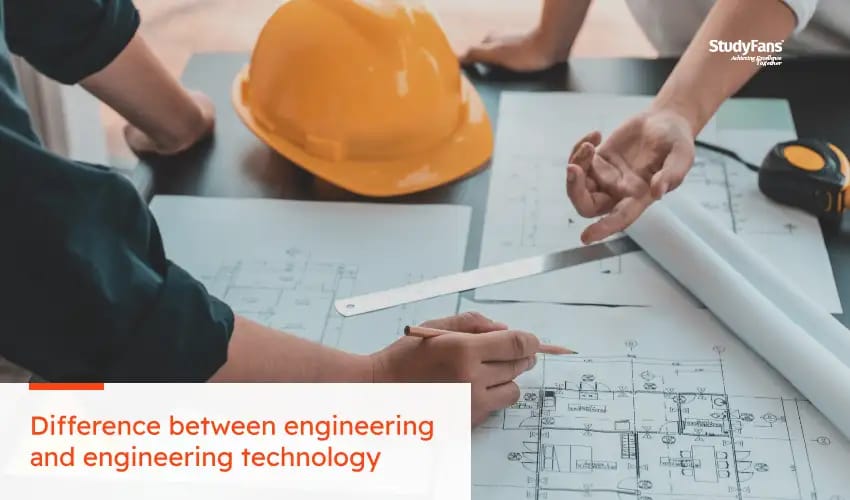

What is the difference between engineering and engineering technology? Engineering and engineering technology are two branches related to engineering fields that focus on the application of mathematics and physics to create new devices. However, engineering technology is more interested in how engineering principles can be applied practically in everyday life and also focuses more on the practical work and physical creation of new devices.
What is an engineering major?
A bachelor's degree in engineering deals with theoretical application more than a bachelor's degree in engineering technology.
Courses in this type of degree are more specifically geared toward enhancing understanding of mathematics and physics to design new devices and technologies rather than preparing to build or configure them.
What is the engineering technology major?
The goal of a bachelor's degree in engineering technology program is to help you build your technology and engineering skills together while helping you gain practical experience.
This means that you will take courses that deal with concepts such as Internet Type (IoT), automation and controls, artificial intelligence, machine learning, cloud computing, and operating systems. You will also study more traditional engineering topics such as calculus, statistics, and physics.
Advantages of studying engineering and engineering technology in Türkiye
Distinctive curricula that are similar to European university curricula.
Modern equipped laboratories.
Practical training opportunities for students combined with theoretical study.
Student exchange programs with European societies.
Providing the opportunity to study in English for international students.
Similarities between engineering and engineering technology
Before discussing the difference between engineering and engineering technology, you should know first the similarities between them.
Both fields focus on Mathematics and Physics. These concepts are important for engineers in any field to understand, whether you are designing a brand-new vehicle or building a bridge.
Another similarity is that graduates of an engineering and an engineering technology degree program tend to work in industries, laboratories, offices, or factories. The team of engineers and engineering technologists creates a mix of practical and conceptual capabilities within the team.
The difference between engineering and engineering technology in the fields of work
Fields of work are an important aspect of the difference between engineering and engineering technology.
The job fields for engineering graduates are different from those for technology graduates. Engineering graduates often work in the design and development of large engineering projects such as buildings and bridges, while technology graduates tend to work on the practical application aspects of these projects. For example, a civil engineering graduate may work on the design of a bridge, while a technology graduate works on the field implementation of that design.
The difference between colleges of technology and other engineering colleges is that there is more focus on practice as well as theoretical knowledge. In addition to industrial training, which involves a longer time than other engineering faculties, students practice training in institutions within the scope of “training workshops” for 1 semester out of 8 semesters.
Engineers jobs:
Engineers
Innovators
Research, development, and design
Management or entrepreneurs
Engineering technology jobs:
Engineers
Executors
Testing, construction, or manufacturing
Management or entrepreneurs
The difference between engineering and engineering technology in the curriculum
In engineering faculties, students receive an in-depth theoretical education that includes advanced mathematics and physics and relies heavily on developing analytical abilities and theoretical solutions. In colleges of technology, the curriculum is more applied, as it includes many practical projects, workshops, and practical training within institutions.
Engineering specialization subjects in Turkish universities
Study subjects in Turkish universities for studying engineering disciplines cover the following:
Theoretical and conceptual design learning method.
Attend multiple classes in calculus, statistics, linear algebra, and calculus-based physics courses.
Subjects in engineering technology in Turkish universities
While the subjects of study in Turkish universities in the study of engineering technology specializations cover the following:
Learning method by application and implementation.
Emphasize the application and implementation of current practices to solve specific technical problems.
Coursework includes multiple semesters of calculus, statistics, and algebraic physics courses.
Specializations available in colleges of technology and colleges of engineering
Both colleges of technology and colleges of engineering offer a wide range of specializations.
In engineering colleges, majors include
Civil engineering
Electrical engineering
Software engineering
Mechanical engineering
Computer engineering.
Biomedical engineering
Chemical engineering
Environmental engineering
Geological engineering
Geospatial engineering
Materials science and engineering
Mining engineering
Robotics engineering
In colleges of technology, specializations include practical and technical development, such as
Mechanical engineering technology
Information technology
Energy technology.
Electrical engineering technology
Read more: The best 14 engineering majors in Turkish universities
Study engineering in Türkiye
Engineering is one of the most important academic disciplines offered by universities in Türkiye. The study of engineering relies heavily on theoretical and analytical aspects, in addition to providing spaces for practical application in many classrooms. Engineering programs offer opportunities to specialize in fields such as civil engineering, mechanical engineering, electrical engineering, and others, allowing students to choose a field that best suits their interests.
Read more: prices for studying engineering in Türkiye
Studying technology specialization in Türkiye
Colleges of Technology offer a combination of theoretical and practical education, training students to apply technical knowledge in industrial and business contexts.
Study in these colleges continues for 8 semesters, with a full semester allocated to practical training in workshops and institutions. These colleges provide extensive educational programs in fields such as engineering technology, which helps students acquire strong skills that qualify them to enter the job market directly after graduation.
The language of study for engineering and engineering technology in Türkiye
In Turkish universities, engineering and engineering technology programs are offered in several languages, including English and Turkish, allowing international students to integrate into the education system easily. This diversity of languages contributes to attracting a large number of foreign students seeking a high-quality engineering education.
The best universities to study engineering and engineering technology in Türkiye
Türkiye includes many leading universities in the fields of engineering and engineering technology, including:
Bahcesehir University
Istinye University
Ozyegin University
Gelisim University
Atlas University
Uskudar University
Aydin University
Bilkent University
Read more: Top 10 engineering faculties in Turkey
Admission requirements to colleges of technology and engineering colleges in Türkiye
A copy of the high school diploma or its equivalent, translated and certified.
A copy of the passport, translated and certified.
Personal photos
Turkish or English language proficiency certificates, if available
In addition to proving proficiency in the language, you wish to study as required by the university, taking a language test at the university, or attending an additional year to study the language before starting the specialty study.
Conclusion
Despite the difference between engineering and engineering technology, both fields offer many advantages for international students such as: exciting academic and career opportunities; one of the two approaches may be more attractive to you. Find what meets your requirements and fits your interests. Good luck.
If you wanted to know more or have any questions, we are here to help you and you can always contact us:
Phone: 00905437394024
Or via WhatsApp through this link.
![The Top 10 Universities in Türkiye [Worldwide Ranking]](/_next/image?url=https%3A%2F%2Fbackend.studyfans.com%2Fstorage%2Fmedia%2FPostTranslations%2Fimage%2F882%2FE7WXOQMpNbUZMo5P8Bjvt5WqhQPkmpvd2ajkM1JQ.webp&w=1080&q=75)