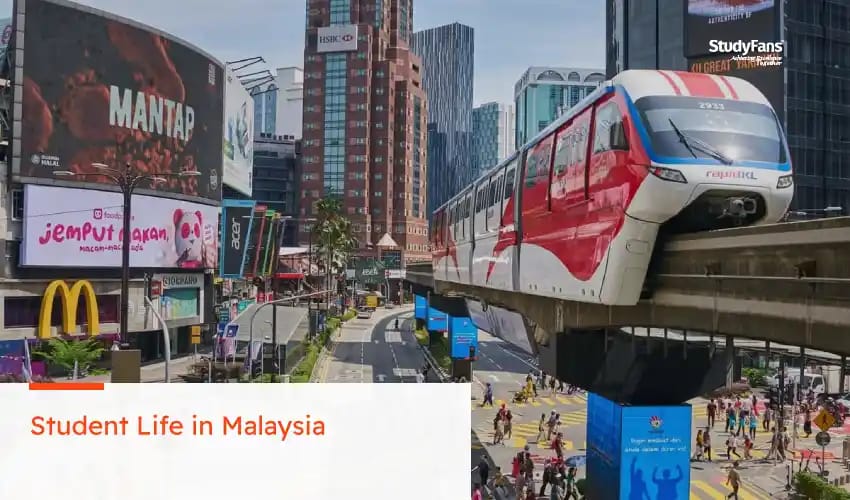

Malaysia is one of the most attractive study destinations for students, with over 50,000 Arab students living there in a safe and comfortable environment that facilitates their adaptation and integration, offering an ideal balance between high-quality education and reasonable living costs. To see how this daily life experience fits into your full academic journey, check out our complete guide to studying in Malaysia, covering the education system, admissions, and top universities in the country.
Accommodation | Multiple options available from $150–$600/month |
Transportation | Modern metro system, buses, and Grab ride-hailing services |
Monthly Cost | Around $400–$700/month including major living expenses |
Halal Food | Widely available across the country |
Safety | One of the safest study destinations in Asia. Ranked 13th globally in the 2025 Global Peace Index and among the safest countries in Asia. |
Student Community | Large, diverse, and supportive international student population, including many Arab students. |
Overview of Student Life in Malaysia
Malaysia is one of the most culturally diverse countries in Asia, which directly impacts student life, making it an easy and comfortable environment for international students from various nationalities. This diversity contributes to a smooth balance between their studies and daily lives, as follows:
Rich cultural diversity: The community is made up of Malays (around 60%), Chinese (25%), Indians (10%), along with other minorities, creating a multicultural environment that facilitates integration.
Easy integration: Cultural diversity helps international students feel accepted and easily integrate into the university community and beyond.
Modern infrastructure: This includes advanced transportation networks such as metro and trains, as well as shopping malls, well-equipped hospitals, and fast, reliable internet access.
Tropical climate: Hot and humid weather year-round, which may require some initial adjustment but becomes familiar over time.
Widespread use of English: English is widely used in student cities and universities, facilitating communication and study for international students.
Also Read: Why Study in Malaysia? Top Reasons
Housing Options for Students in Malaysia
Student life in Malaysia offers a well-rounded experience for international students, particularly thanks to the diverse accommodation options available to suit various budgets and lifestyles. Priorities in choosing accommodation are typically given to proximity to student cities, privacy, control over daily living costs, and a safe and supportive environment with easy access to transportation and essential services such as healthcare and security. Types of accommodation in Malaysia include the following:
On-Campus Accommodation (University Dormitories)
On-campus university accommodation is one of the most common forms of student housing in Malaysia among new students, especially at the beginning of their studies, at a cost ranging between $150 and $350 per month, and the rooms are often shared. It is characterized by:
Proximity to the university and educational facilities.
Low cost of living.
A safe and organized environment that supports stability.
Facilitates the integration of Arab students into university life.
Despite its many advantages, on-campus accommodation has some limitations, such as the following:
Limited privacy.
Shared rooms.
Fixed rules.
Here is a student housing comparison in some Malaysian universities.
Feature | University of Malaya (UM) | Universiti Putra Malaysia (UPM) | Taylor’s University | UCSI University |
Type of Accommodation | On-campus dorms | Residential colleges and student villages | On-campus residence and private student apartments | On-campus residence and off-campus condos |
Room Types | Shared, twin, or limited single rooms | Mostly shared and twin rooms | Single, twin, and en-suite apartments | Single, shared rooms, and condo units |
Modernity and Condition | Mixed | Moderate, some older buildings | Very modern and well-maintained | Moderate to good depending on building |
Privacy Level | Low to medium | Low | High (private en-suite options available) | Medium to high |
Bathrooms | Mostly shared | Mostly shared | Mostly private (in newer residences) | Mixed (shared or private) |
Facilities | Basic: study rooms, cafeteria, laundry | Basic, with student support facilities | Gym, pool, study lounges, WiFi, security, and cafes | Basic to moderate facilities depending on residence |
Security | Strong campus security | Strong campus security | 24/7 security with CCTV and access cards | Good security systems |
Comfort Level | Moderate | Moderate | High comfort standard | Medium |
Location | Inside campus | Inside campus | Inside or very near campus | Inside and nearby off-campus housing |
Cost Range | Low | Low | High | Medium |
Off-Campus (Private Apartments)
Off-campus housing means renting a room, studio, or full apartment outside the university campus. Students usually choose this option when they want more independence, privacy, and flexibility compared to university dorms.
Types of Off-Campus Housing
Studio Apartment: A small private unit with one room, a bathroom, and a compact kitchen.
Shared Room in Apartment: A private room inside a shared flat with common kitchen and bathroom facilities.
Full Apartment: A complete unit rented by one person or shared with friends, offering more space and privacy.
Monthly Cost:
Off-campus rent in Malaysia usually ranges between $200 and $600 per month, depending on the city, location, and type of housing. Studios are usually the most expensive, while shared rooms are the most affordable option.
Advantages:
More privacy compared to university dorms.
Greater independence in lifestyle and daily routine.
Wide range of options for different budgets.
Some apartments include facilities like gyms, pools, and 24/7 security.
Disadvantages:
Higher cost than on-campus housing.
Requires time and effort to search and choose the right place.
Additional responsibilities such as utilities (electricity, water, internet).
Maintenance issues are handled by the tenant.
Average Rent in Major Malaysian Cities
City | Shared Room | Studio | 2-Bedroom Apartment |
Kuala Lumpur | RM 800 – RM 1,500 | RM 1,200 – RM 2,500 | RM 2,000 – RM 4,500 |
Selangor | RM 500 – RM 900 | RM 1,000 – RM 1,800 | RM 1,800 – RM 3,200 |
Penang | RM 450 – RM 800 | RM 1,000 – RM 1,600 | RM 1,600 – RM 3,000 |
Johor Bahru | RM 400 – RM 750 | RM 900 – RM 1,500 | RM 1,500 – RM 3,000 |
Homestay Accommodation
It means living with a Malaysian host family in their home instead of staying in a university dorm or private apartment. Homestay accommodation is designed to help international students experience daily local life and adapt faster to the culture and environment.
Cost of Homestay:
The average cost of a homestay in Malaysia ranges from $250 to $450 per month, and in many cases meals are included, especially breakfast and dinner. Prices may vary depending on location and the services provided by the host family.
Advantages:
Daily living experience with a Malaysian family.
Home-cooked meals are often included.
Safe and stable environment for new international students.
Improving English and understanding local culture faster.
Disadvantages:
Limited privacy compared to apartments or dorms.
Students must follow the house, including curfews, guests, and lifestyle rules.
Less independence in daily routines.
So, homestay accommodation in Malaysia is a good option for students who are new to the country and want a safe, structured environment. It is also ideal for those who want to improve their English and experience Malaysian culture from a daily life perspective rather than just studying.
Temporary Accommodation (First Arrival in Malaysia)
When students first arrive in Malaysia, they usually don’t move directly into permanent housing. Instead, they stay in temporary accommodation for a few days or up to two weeks, such as hotels, Airbnbs, or guesthouses, until they secure a permanent place to live.
This is a normal part of student life in Malaysia, especially during peak intake periods when demand for student housing is high in cities like Kuala Lumpur, Penang, and Johor Bahru.
Average Cost
Temporary accommodation in Malaysia usually costs:
$20 – $50 per night, depending on location and type.
Budget hostels are cheaper options.
Private hotels and apartments in central areas cost more.
Students usually stay in temporary accommodation for around 7 to 10 days. During this time, they go out to check different housing options, compare prices and locations, and choose what fits their budget and needs without pressure. After that, they move into long-term student housing or a private apartment near their university.
Also Read: 10 tips to find student accommodation in Malaysia
Cost of Living for International Students in Malaysia
Before choosing to study in Malaysia, it’s important to understand how monthly expenses work in real life. In student life in Malaysia, spending is different from one student to another depending on lifestyle, city, and housing choice. Some students try to keep costs low, while others prefer more comfort and flexibility in daily living.
Monthly Student Budget (Based on Lifestyle)
The following is a monthly breakdown showing a student's expenses for accommodation, food, transportation, and daily needs in Malaysia.
Lifestyle Type | Monthly Budget | What It Includes |
Budget Student (Frugal) | $400 – $500 |
|
Average Student | $600 – $800 |
|
Comfortable or High Spending | $1000 – $1500 |
|
This breakdown shows that the biggest factor affecting monthly expenses is usually accommodation, followed by food and transportation choices.
Cost Differences Between Cities in Malaysia
The cost of living in Malaysia changes depending on the city, as follows:
City | Cost level vs. Kuala Lumpur | Notes |
Kuala Lumpur | 100% | Highest cost as it is the capital city with higher rent and living expenses. |
Selangor | 10–15% cheaper | Very close to KL with slightly lower housing and daily costs. |
Penang | 20–25% cheaper | Popular student destination with balanced lifestyle and cost. |
Johor Bahru | 25–30% cheaper | More affordable housing and a growing student population. |
Melaka | 30–35% cheaper | Lower overall cost, quieter city, and budget-friendly lifestyle. |
Transportation and Mobility in Malaysia for International Students
Transportation plays an important role in student life in Malaysia, as many students rely on cost-effective and convenient ways to travel between their universities, accommodation, and everyday destinations. Malaysia provides a well-developed public transportation network, particularly in Kuala Lumpur and surrounding areas, making daily commuting easier for both local and international students.
Public Transportation
Public transportation in Malaysia is widely used by students because it is affordable and connects the most important areas in the city. It includes:
Metro (LRT, MRT, Monorail): The fastest way to travel in Kuala Lumpur and Selangor, connecting universities, residential areas, and commercial zones.
Buses (RapidKL Bus): A low-cost transportation option with extensive coverage across cities and suburban areas, though travel times can increase significantly during peak hours.
Commuter Train (KTM Komuter): Used for longer distances between cities and suburban areas, especially for students living outside central Kuala Lumpur.
Transportation Cost Overview:
Type | Cost |
Single trip (Metro/Bus) | RM 1 – RM 5 |
Monthly travel pass | RM 100 – RM 150 |
MyRapid Card usage | Up to 20–30% savings on selected routes |
Practical Tip:
Using a Touch ’n Go card or MyRapid card helps reduce daily transport costs and makes travel easier. Many students save around 20–30% on fares, which helps lower overall expenses in student life in Malaysia.
Ride-Hailing Apps in Malaysia
Ride-hailing apps are widely used by international students because they provide fast and flexible transport, especially when public transport is not convenient or available. These apps include:
Grab: The most popular app in Malaysia, used for daily trips and short-distance travel.
MyCar: A local alternative that is sometimes cheaper depending on demand.
InDrive: Known for lower prices, as passengers can negotiate the fare before confirming the ride.
The average cost for a short trip inside the city is usually between $2 and $8, depending on distance and traffic conditions.
Our useful tip for you is using GrabShare, which allows ride-sharing with other passengers and can reduce the fare by up to 40%.
Bikes and Electric Scooters
They have become a popular way for short-distance travel in Malaysian cities, especially in Kuala Lumpur, where many students use them for quick daily movement.
Bike Sharing: Available in some areas of Kuala Lumpur through services like oBike and Mobit, mainly used for short trips around the city.
E-Scooters: Electric scooters have grown in popularity in recent years and are commonly used for short urban distances.
The cost is usually around $0.5 – $2 per short ride, depending on duration and service provider.
This option is practical for short distances because it is affordable, eco-friendly, and saves time in crowded city areas.
Owning a Car or Motorcycle (Long-Term Stay)
Some international students who stay in Malaysia for a long period consider owning a vehicle, especially when living far from campus or in areas with limited public transport. They can purchase:
Used car: Usually starts from $3,000 to $8,000, depending on the model and condition.
Motorcycles: It ranges from $500 to $2,000, making them a more affordable option for students.
In addition to the purchase price, there are extra ongoing costs such as insurance, fuel, maintenance, and parking fees.
This option is more suitable for students who live far from their university or outside central city areas where daily commuting becomes difficult.
Also Read: Transportation and Public Transit for International Students in Malaysia
Food and Dining in Malaysia
Malaysia is one of the easiest countries for Muslim students to find halal food, as halal options are widely available and affordable from university cafeterias and local restaurants to international fast-food chains.
Halal Food in Malaysia
Around 60% of Malaysia's population is Muslim, so halal food is available almost everywhere, including restaurants, supermarkets, food courts, and university campuses.
Malaysia's halal certification system is managed by JAKIM, whose halal certification is recognized internationally and trusted by consumers around the world.
Most major international fast-food chains in Malaysia operate with halal-certified menus.
Popular Halal Restaurants include the following:
International Chains |
|
Local Restaurants |
|
Quick Tip: When choosing a place to eat, check whether the restaurant displays an official JAKIM halal certificate or logo. Certified outlets clearly show their halal status, making it easier for students and visitors to identify approved dining options.
Food Options and Costs in Malaysia
Food is one of the most manageable expenses for students in Malaysia. Whether you prefer cooking at home or eating out, there are options available for almost every budget, making it easier to control monthly spending.
Food Option | Average Cost |
Cooking at Home | $100 – $150 per month |
University Cafeterias | $2 – $4 per meal |
Food Courts and Mamak Restaurants | $2 – $5 per meal |
Mid-Range Restaurants | $5 – $15 per meal |
Fine Dining Restaurants | $20+ per meal |
You can mix between home cooking and occasional dining to manage food expenses and enjoy a more affordable student life in Malaysia.
Culinary Diversity in Malaysia
There is a wide variety of food options available across the country. Students can easily explore different cuisines at affordable prices, including the following:
Malay Cuisine: Nasi Lemak, Satay, rice-based dishes, and traditional local meals.
Chinese Cuisine: Noodles, fried chicken dishes, Dim Sum, and various stir-fried specialties.
Indian Cuisine: Roti canai, biryani, curry-based dishes, and vegetarian options.
Arab Cuisine: Shawarma, Kabsa, Mandi, and other Middle Eastern dishes available in dedicated Arab restaurants.
International Cuisine: Italian, Japanese, Korean, Thai, and many other global food choices found in major cities and student areas.
Healthcare and Health Insurance in Malaysia
Healthcare is a key part of student life in Malaysia, as the country provides a strong medical system that ensures students have access to a safe and affordable treatment during their studies.
Healthcare System in Malaysia:
Malaysia is one of Asia’s leading medical tourism destinations, known for high-quality and internationally accredited hospitals.
Public hospitals offer very affordable healthcare services, with consultation fees ranging from USD 5–20.
Private hospitals provide faster services and advanced medical facilities, with consultation fees ranging from USD 50–150.
International students can access both public and private healthcare systems depending on their needs and insurance coverage.
Popular Hospitals in Kuala Lumpur:
Prince Court Medical Centre
Gleneagles Hospital Kuala Lumpur
Pantai Hospital Kuala Lumpur
KPJ Ampang Puteri Specialist Hospital
Sunway Medical Centre
International Student Health Insurance
Health insurance is required for all international students in Malaysia and plays an essential role in ensuring safe and stable life throughout their studies.
Every international student is required to have valid health insurance for the duration of their studies.
Insurance types include:
University insurance: Often included in tuition fees, costing around USD 100–200 per year.
Private insurance: Provides more extensive coverage and flexibility, costing around USD 150–300 per year.
The coverage includes medical treatment, emergency services, prescription medications, and diagnostic tests.
University vs. Private Insurance
Aspect | University Insurance | Private Insurance |
Cost | Lower (100–200 USD per year) | Higher (150–300 USD per year) |
Coverage | Basic healthcare needs | Broader medical coverage |
Flexibility | Limited provider network | Wider hospital choice |
Claims process | Simple but restricted | Faster and more flexible |
Suitable for | Students on a tight budget | Students seeking full protection |
Pharmacies and Medicines
Pharmacies are easily accessible throughout Malaysia, which supports the convenience and safety of students, including:
Pharmacy chains: Major brands such as Guardian, Watsons, and Caring operate widely across cities and shopping areas.
Medication access: Many common medicines can be purchased without a prescription.
Cost level: Drug prices are generally affordable and can be around 50% cheaper than in many European countries.
Important advice: Students should bring a personal supply of any long-term or chronic medications for at least the first three months of their stay.
Safety and Personal Security in Malaysia
Safety is one of the strongest factors that enhances student life in Malaysia, as the country is known for its stability and low crime rates compared to many regional destinations.
Malaysia ranks 23rd globally in the Global Peace Index, reflecting its strong security environment.
The country has a relatively low crime rate compared to neighboring countries in Southeast Asia.
Police services are generally cooperative, and many officers can communicate in English, which helps international students feel more secure.
Safety Tips for Students:
Avoid walking alone in isolated or poorly lit areas at night.
Keep digital and physical copies of important documents such as your passport and student visa.
Register your presence with your home country’s embassy upon arrival for added security support.
The emergency number in Malaysia is 999 (Police, Fire, Ambulance).
Also Read: Healthcare and Safety in Malaysia: A Guide for International Students
Best Cities for Student Life in Malaysia
Choosing the right city plays a major role in shaping a student’s life, as each city offers a different balance between cost, lifestyle, and academic opportunities, as follows:
Kuala Lumpur
It is the capital city and largest urban hub in Malaysia, hosting the highest concentration of universities and educational institutions.
Advantages: Vibrant lifestyle, excellent public transportation system, and strong opportunities for part-time work and internships.
Disadvantages: Higher living costs compared to other cities, heavy traffic congestion, and hot weather throughout most of the year.
Average monthly cost: Approximately USD 650 – 900 depending on lifestyle and accommodation choices.
Selangor
It is the state surrounding Kuala Lumpur, covering areas such as Subang Jaya, Petaling Jaya, and Shah Alam. It offers a convenient balance for student life in Malaysia between city access and lower living costs.
Advantages: More affordable than Kuala Lumpur, generally calmer environment, and close proximity to major universities and urban facilities.
Disadvantages: In some areas, public transport is limited, so students may need to rely on ride-hailing services or personal transport.
Average monthly cost: Around USD 550 – 750, depending on lifestyle and accommodation choices.
Penang
A well-known island destination often called the “Pearl of the Orient”, combining education with a scenic coastal lifestyle.
Advantages: Beautiful environment, beaches, rich food culture, and generally lower living costs compared to major cities.
Disadvantages: Far from the capital Kuala Lumpur and offers fewer university options compared to larger academic hubs.
Average monthly cost: Approximately USD 500 – 650, depending on lifestyle and accommodation.
Johor Bahru
A southern city located near the Singapore border, making it a strategic location that can positively influence life in Malaysia through cross-border opportunities and lower living costs.
Advantages: Very affordable compared to other major cities, close proximity to Singapore, and rapid urban and economic development.
Disadvantages: Less developed infrastructure and fewer urban facilities compared to Kuala Lumpur.
Average monthly cost: Approximately USD 450 – 600, depending on lifestyle and accommodation choices.
Melaka
A historic city known for its cultural heritage and calm environment, offering a quieter side of student life in Malaysia.
Advantages: One of the most affordable cities, very safe, and suitable for students who prefer a peaceful lifestyle focused on study.
Disadvantages: Limited university options and a less active social and entertainment scene compared to larger cities.
Average monthly cost: Approximately USD 400 – 550, depending on lifestyle and accommodation choices.
Student Activities and Social Life in Malaysia
A big part of student life in Malaysia goes beyond academics, offering students a vibrant environment filled with activities that help build friendships, skills, and memorable experiences.
On-Campus Activities
Student clubs: Universities offer a wide range of clubs, including sports, cultural, religious, and arts-based groups, allowing students to explore their interests and develop new skills.
Events and activities: Campuses regularly organize orientation week, cultural festivals, competitions, and graduation ceremonies that encourage student engagement and interaction.
Facilities: Most universities are equipped with modern facilities such as gyms, libraries, cafés, and prayer rooms to support both academic and social life on campus.
Off-Campus Activities
They are outside the university, including:
Tourism: Explore iconic landmarks such as the Petronas Towers, Batu Caves, and the scenic Cameron Highlands.
Beaches and islands: Relax or travel to famous destinations like Langkawi, Perhentian Islands, and Port Dickson.
Shopping: Visit major shopping malls such as Pavilion KL, Suria KLCC, and Mid Valley Megamall, which offer entertainment, dining, and retail options.
Sports and fitness: Students can engage in football, swimming, and various water sports available in many recreational centers and coastal areas.
Top 10 Places to Visit in Malaysia
Petronas Twin Towers (Kuala Lumpur).
Batu Caves (Selangor).
Cameron Highlands (Pahang).
Langkawi Island (Kedah).
Perhentian Islands (Terengganu).
Penang Island (Penang).
Melaka Historic City (Melaka).
Taman Negara National Park (Pahang).
Sunway Lagoon Theme Park (Selangor).
Kuala Lumpur City Centre (KLCC Park).
Arab and Muslim Communities
There is a well-established Arab and Muslim community, which makes it easier for international students to adapt and feel at home. There are:
A large and diverse Arab student population, including students from Saudi Arabia, Egypt, Yemen, Jordan, and other countries.
Mosques are widely available across cities and residential areas, ensuring easy access for daily prayers.
Arabic restaurants and grocery shops are common in major student cities, providing familiar food and products.
Regular social gatherings and cultural activities help students build connections and maintain a sense of community.
Also Read: How to Improve Student Life in Malaysia
Part-Time Work While Studying in Malaysia
Part-time employment allows international students to gain experience and support their living expenses while studying.
According to Malaysian regulations, international students are allowed to work up to 20 hours per week during academic semesters and full-time during official semester breaks.
Requirements include obtaining approval from their university and a valid work permit from the immigration authorities.
Types of jobs available: Private tutoring, restaurant and café work, research assistant roles, and freelance opportunities in digital fields.
Average hourly wage: Approximately USD 3 – 7 per hour, depending on the job type and location.
Examples of Part-Time Jobs and Monthly Income:
Job Type | Average Monthly Income |
Private Tutor | USD 200 – 500 |
Café/Restaurant Staff | USD 250 – 450 |
Research Assistant | USD 300 – 600 |
Freelancing (online work) | USD 200 – 700+ |
Important advice: Students should maintain a balance between work and studies to ensure academic performance is not affected.
Practical Tips for Adapting and Succeeding in Student Life in Malaysia
Adapting to a new country is a key part of your life, so small daily habits can make a big difference in how smoothly students settle in.
First weeks: Join Orientation Week, introduce yourself to classmates, and explore nearby areas to become familiar with daily routines.
Budget control: Plan a monthly budget, avoid unnecessary spending at the beginning, and use apps to track expenses.
Language skills: Practice English regularly, even with simple sentences, and learn basic Malay words for everyday communication.
Food choices: Try local Malaysian meals to understand the culture, and cook at home to save money when possible.
Social connection: Stay active socially by joining clubs and engaging with both international and local students instead of isolating yourself.
Health habits: Keep a balanced lifestyle with regular exercise, access to gym facilities, and sufficient sleep.
Safety awareness: Always keep personal belongings secure and save important emergency contacts for quick access when needed.
Explore: Post-study opportunities in Malaysia
Common Challenges and How to Deal With Them
While studying in Malaysia offers many opportunities, international students may face a few common challenges during their transition, including:
Homesickness
Missing family and friends is normal. Stay connected through regular calls, build a daily routine, and get involved in campus activities to feel more at home.
Hot and Humid Weather
Malaysia has a tropical climate. Stay hydrated, wear light clothing, and spend time in air-conditioned spaces when needed.
Language Barrier
If English is not your first language, don't worry. Practice speaking daily, engage with classmates, and watch English content to improve your communication skills.
Cultural Differences
Malaysia is a diverse and multicultural country. Be open to new experiences, learn about local traditions, and respect cultural differences to adapt more easily.
Time Management
Managing studies and personal life is essential. Create a schedule, stay organized, and avoid procrastination to maintain a healthy academic-life balance.
Conclusion
Student life in Malaysia offers a unique combination of quality education, cultural diversity, affordability, and unforgettable experiences. With proper preparation and a positive mindset, studying in Malaysia can be the first step toward achieving your academic and career goals.
If you wanted to know more or have any questions, we are here to help you and you can always contact us:
Phone: 00601127766506
Or via WhatsApp through this link.
![The Top 10 Universities in Türkiye [Worldwide Ranking]](/_next/image?url=https%3A%2F%2Fbackend.studyfans.com%2Fstorage%2Fmedia%2FPostTranslations%2Fimage%2F882%2FE7WXOQMpNbUZMo5P8Bjvt5WqhQPkmpvd2ajkM1JQ.webp&w=1080&q=75)